


Port Wake is about to be ravaged by Storm Wendy, and there are containers spread around all over the place. If you've ever wondered where your order from Temu got to, then this chaotic container port is probably a fair simulation of what happened to it.
At the heart of Docked is a family story featuring dad Bill, Tommy, Mark & Kate. I couldn't help thinking that Yellowstone may have been some inspiration here. I was expecting a tale as painfully bad as Truck Driver: The American Dream, but it's actually not bad at all. It's an everyday story of a prodigal son (Tommy) who returns to the family cargo handling business to help out after a successful tour with his rock band! The story never really intrudes with the gameplay too much, and is replete with vocalised sibling rivalry, teasing and leg-pulling, and uses GTA V-style character swapping to enable a sort-of single player co-op mode.
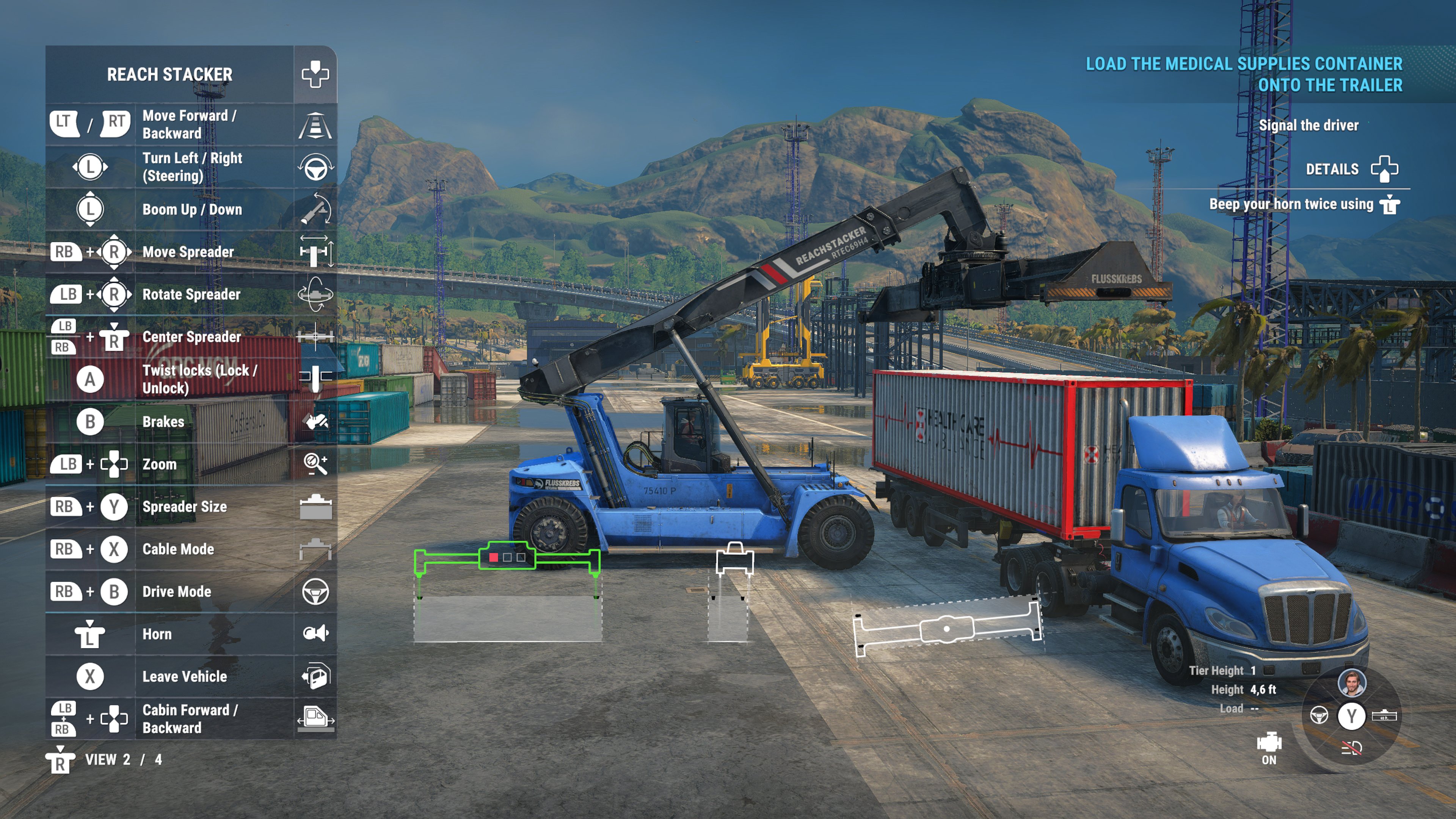
In Docked you're really thrown in at the deep end and given the task of moving two hazardous containers to safety by using one of Port Wake's massive STS (Ship To Shore) cranes. The next mission seems simpler driving a Reach-Stacker (a large tele-handler) and so-on. Terminal Tractors are the simplest vehicles to drive, and pull containers around the dock on articulated trailers. You can leave a vehicle at any time, wander around, explore and take control of any other available vehicle–it's undeniably impressive stuff.
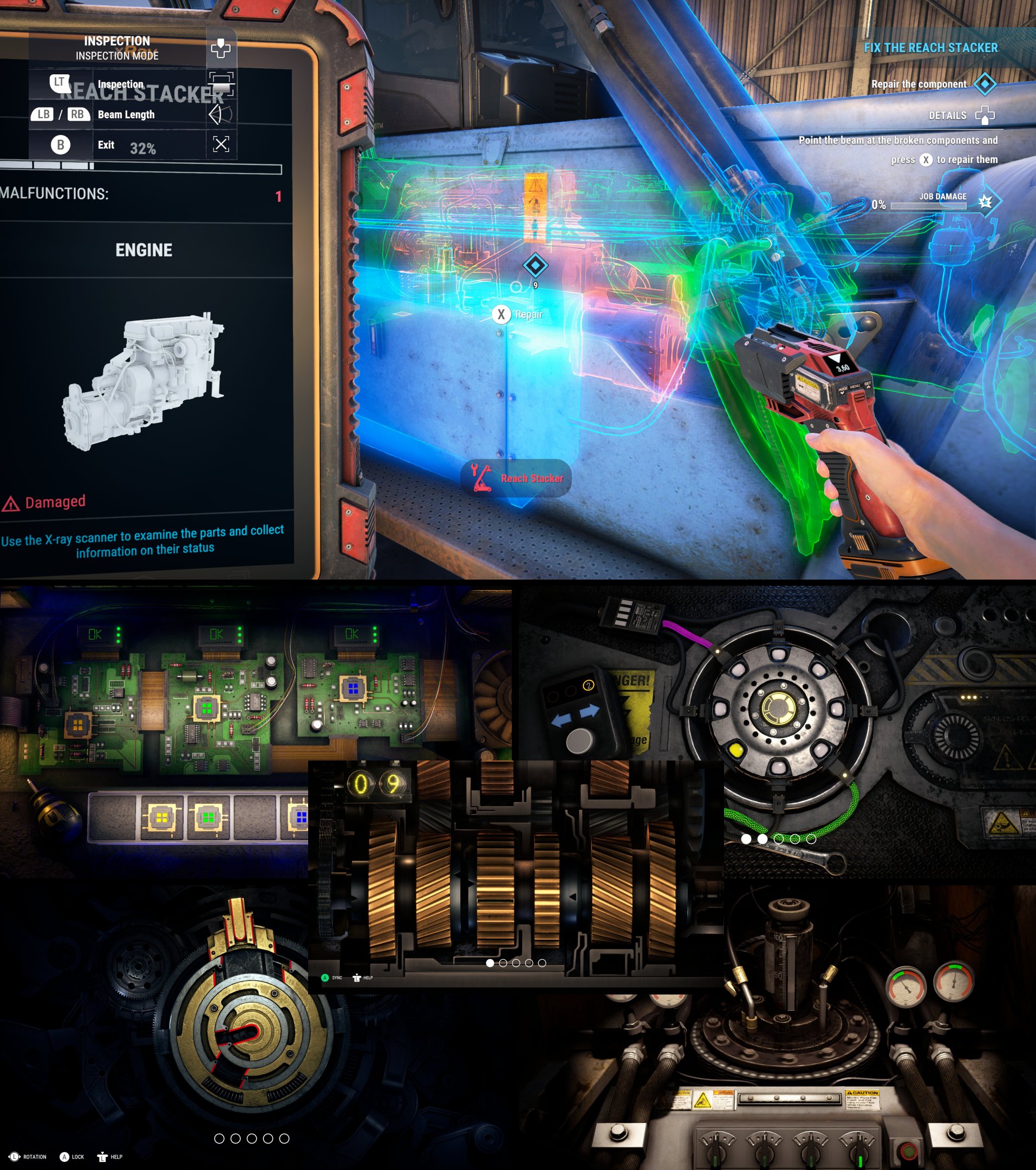
Periodically vehicles will break down or get damaged and you'll have to use a damage scanner to find the problem, and then repair it by completing one of the minigames (below)
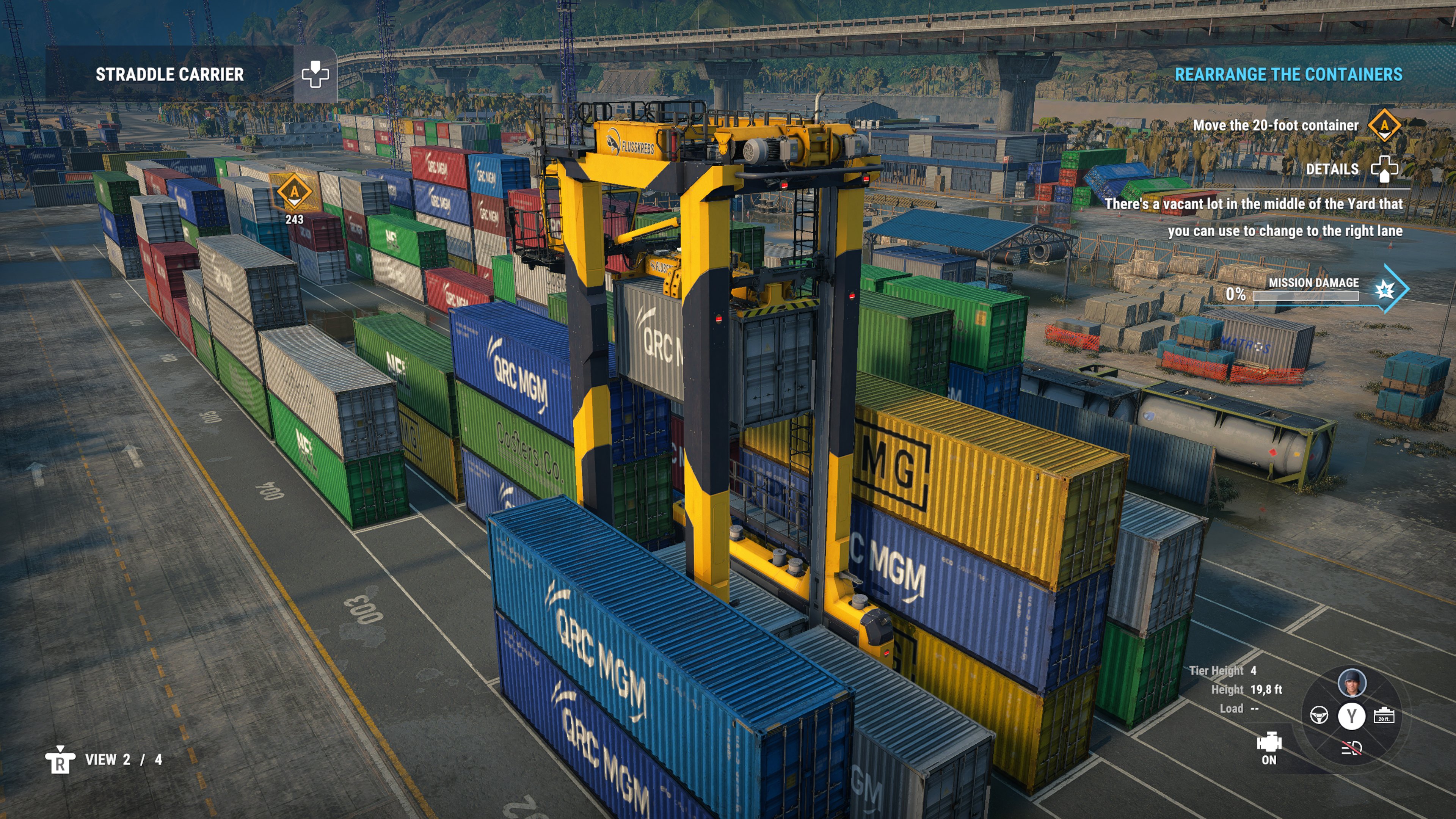
The majority of Docked gameplay works well, but it has an overcomplicated micro-management system that will baffle many, and take actual managers a while to get their heads around. We don't think we're alone in finding this system confusing as the game does actually advise you that if you're not sure how to maximise your cargo throughput, you can always ask the AI to help out–but it'll cost you. The basic transport unit of TEU (Twenty-Foot Equivalent Unit) is what you deal in. One TEU represents one of the short containers you may see a pair of every day on a truck. The longer ones (40ft) are equal to 2 TEU. The key always seems to be to not overreach your capabilities and upgrade your dockyard vehicles and infrastructure at every opportunity.

Docked has a couple of rough edges, and there are inexplicably keyboard commands and prompts on-screen when we initially load up the game, which is confusing and kind of smacks of a lack of console optimisation by the QA team. With at least 2 DLCs planned I'm sure these insignificant issues will be fixed.
The game also features a radial dial for selecting allsorts, from lights to wipers and even drive/park. Once again this doesn't seem at all well optimised for an Xbox controller, which is weird considering how well the crane & loader controls are, and no matter how much I fiddled with it I couldn't always select what I wanted to quickly–even having completed the game!

While the Reach Stacker is undoubtedly the workhorse of the yard, they're dwarfed by the largest machines–the STS cranes, and the almost-as-huge 160-wheel MHC (Mobile Harbour Crane) that incredibly turns on a sixpence, crabs sideways and can lift just about anything is almost as mind-boggling. The ‘Hopper’ is a large, weird vehicle–basically just a big frame with wheels that is loaded by a crane at the top and funnels grain or aggregates through a nozzle down into waiting trucks. Unlocking and mastering all of the machines in Docked is a fascinating journey.
The UI can be rather intrusive, although you can usually select a camera that gives you a decent view of whatever particular action you need to perform (the various machines have anything between 2 and 4 camera views), and you can also temporarily remove the lengthy controls menu that consumes the left side of the screen by pressing up on the D-pad. Lining up the 'spreader' (the thing that attaches a container to the crane) is where skill is really required, but a 3 dimensional guide helps you line it up side-to-side (yaw), depthwise (front-to-back) and the angle–you can't always square up to a container, so fine adjustments are usually required. Saber have done a great job of simulating the delicate movements possible with the various vehicles, whether it's on a stormy sea or on uneven ground. The ‘cable mode’ means you can pick up oversize loads, irregularly shaped loads and even damaged containers, but loads swinging on the cables becomes an issue to deal with.
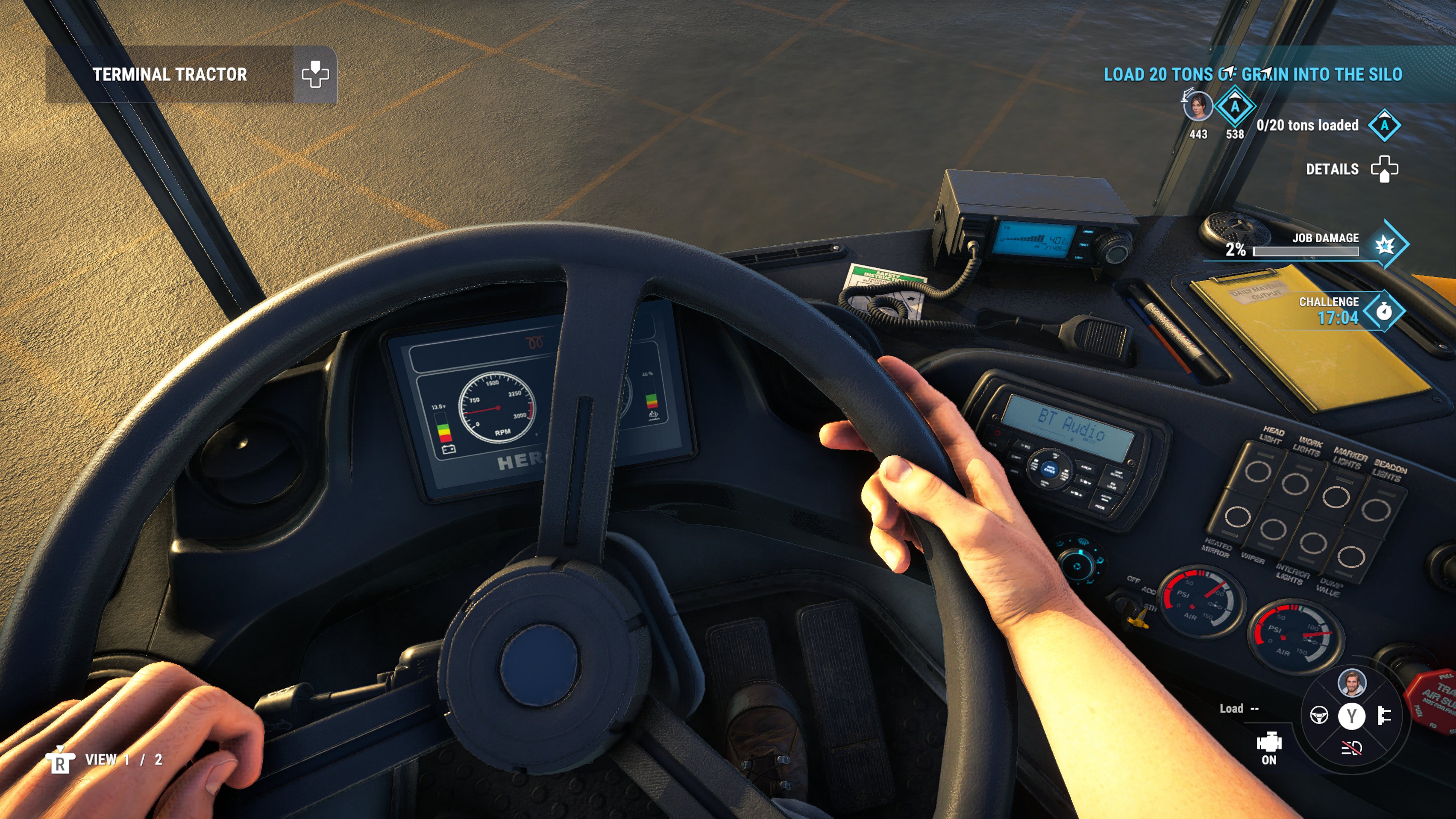
The vehicles are intricately detailed and superbly animated–this extends to the drivers who you can see operate the controls, steer the vehicles and, in the faster vehicles, even bounce up and down on their shock-absorbing seats if you use one of the third-person views. I was amazed and impressed to see that you have to connect air hoses on trailers to release the brakes, or else you're going nowhere fast. When exploring in first-person there's an insane amount of detail on parts of the various machines that many will never see, and little touches like working cab displays, indicators (flashers) that flash the side you're actually turning, brake & reversing lights and exhaust stack flaps on the diesel-powered Terminal Tractors. The game's sound effects are also good, with a lot of different engine, electrical motor, hydraulic pump and metal clanking sounds combining to add to the atmosphere.
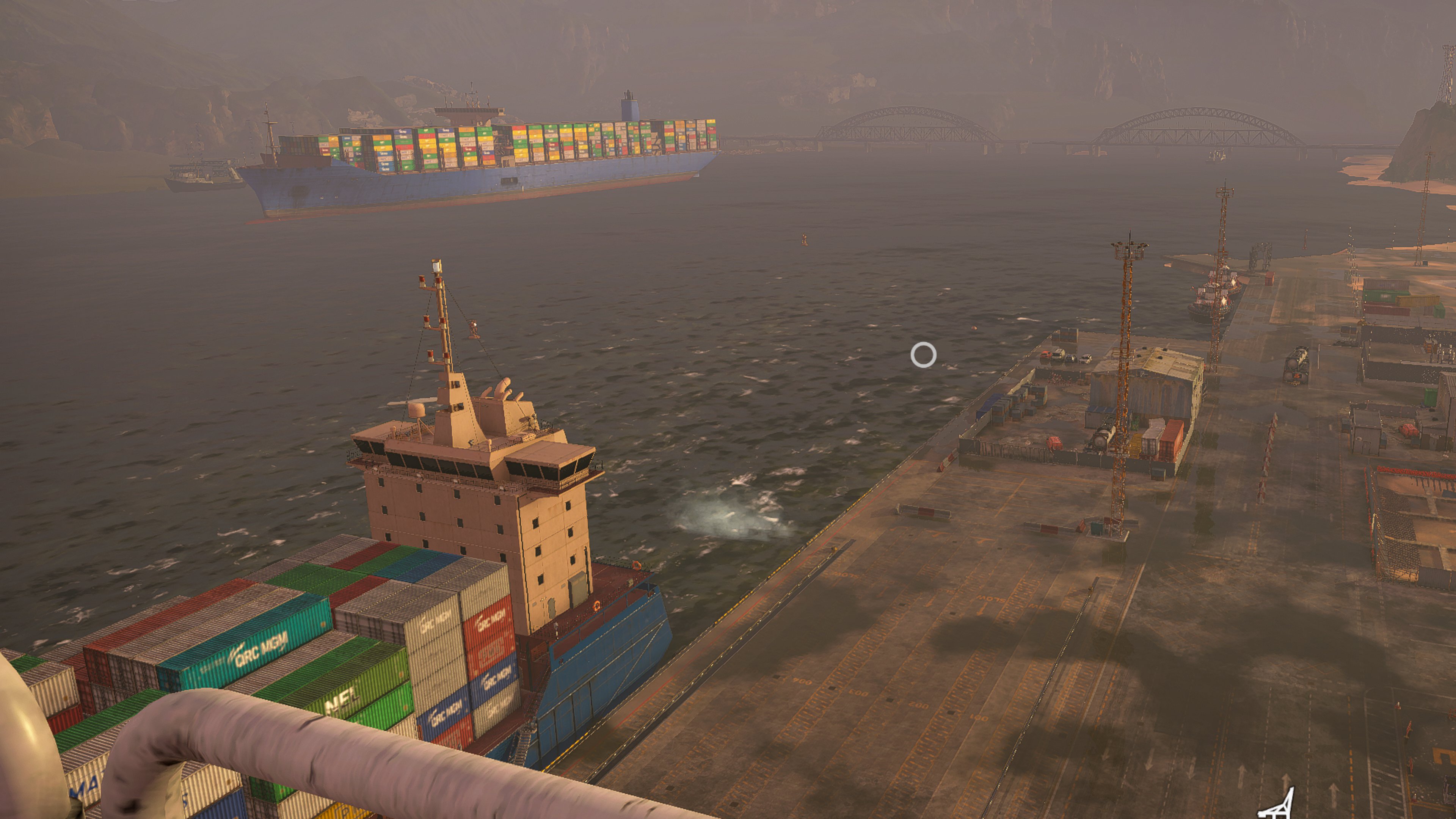
The complexity and scale of the various cranes and machines is impressive, the STS crane is SO big that it requires several flights of steps, a couple of ladders and an elevator to reach the cab. If you didn't think you could get lost on a crane, then think again!
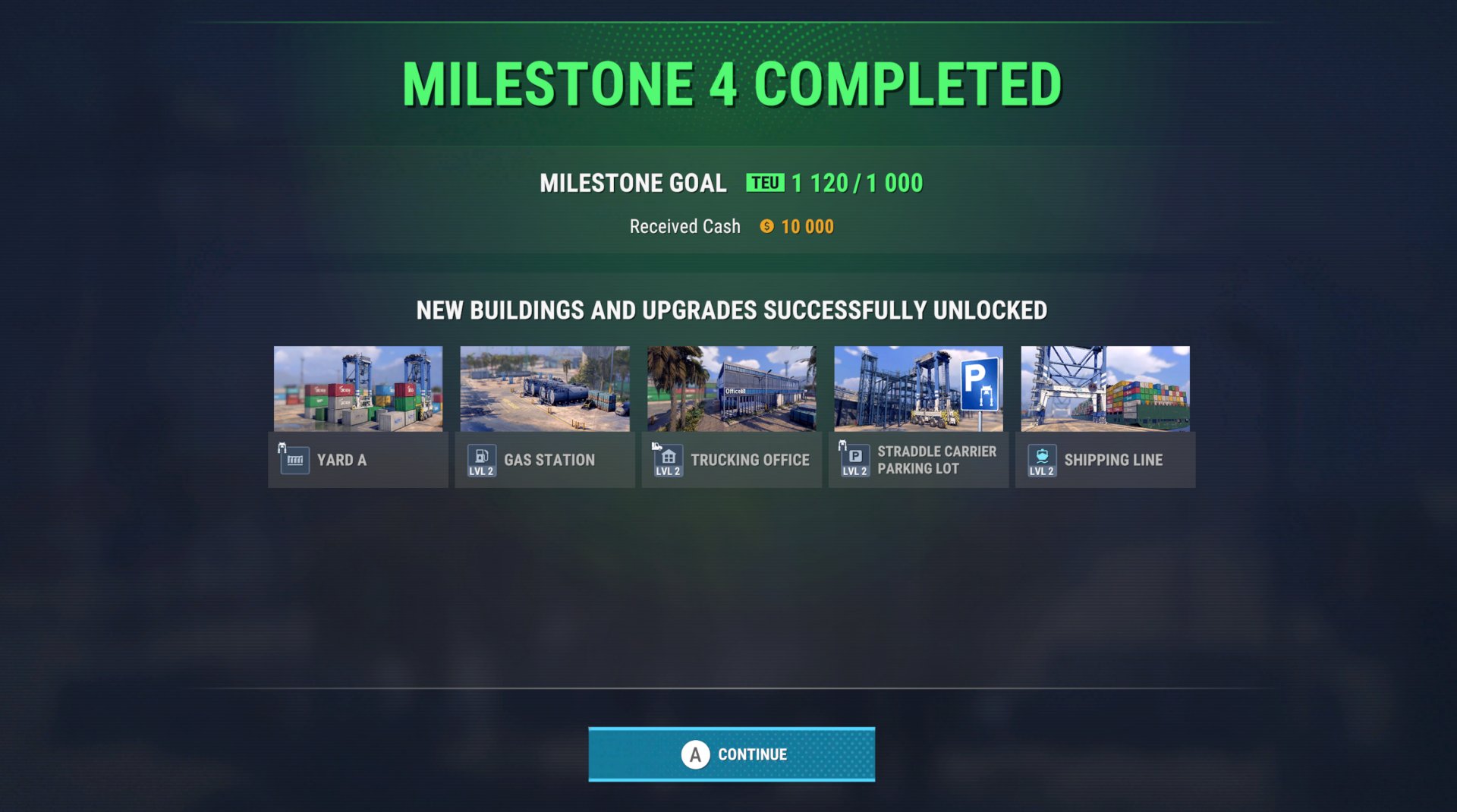
The game isn't fussy about mission order so you can do any of the available jobs, so if you want to do one that sounds interesting or just don't fancy the look of one you can put it off until later. Milestones are completed by achieving certain things, obtaining new vehicles or completing certain missions, and unlock new development possibilities for Port Wake. Complete 28 days and you'll be rewarded with the ‘Open Port’ Free Roam mode, where you can use any vehicle and explore as you wish.
Each item transported has its own damage gauge, and if there are several they all accumulate, so you need to be careful–although not that careful. Some loads stress the lifting limits of the machines (crane's cables will snap, the Reach-Stacker will refuse to lift or overbalance), so you need to figure out how to put the minimum amount of strain on the machine.
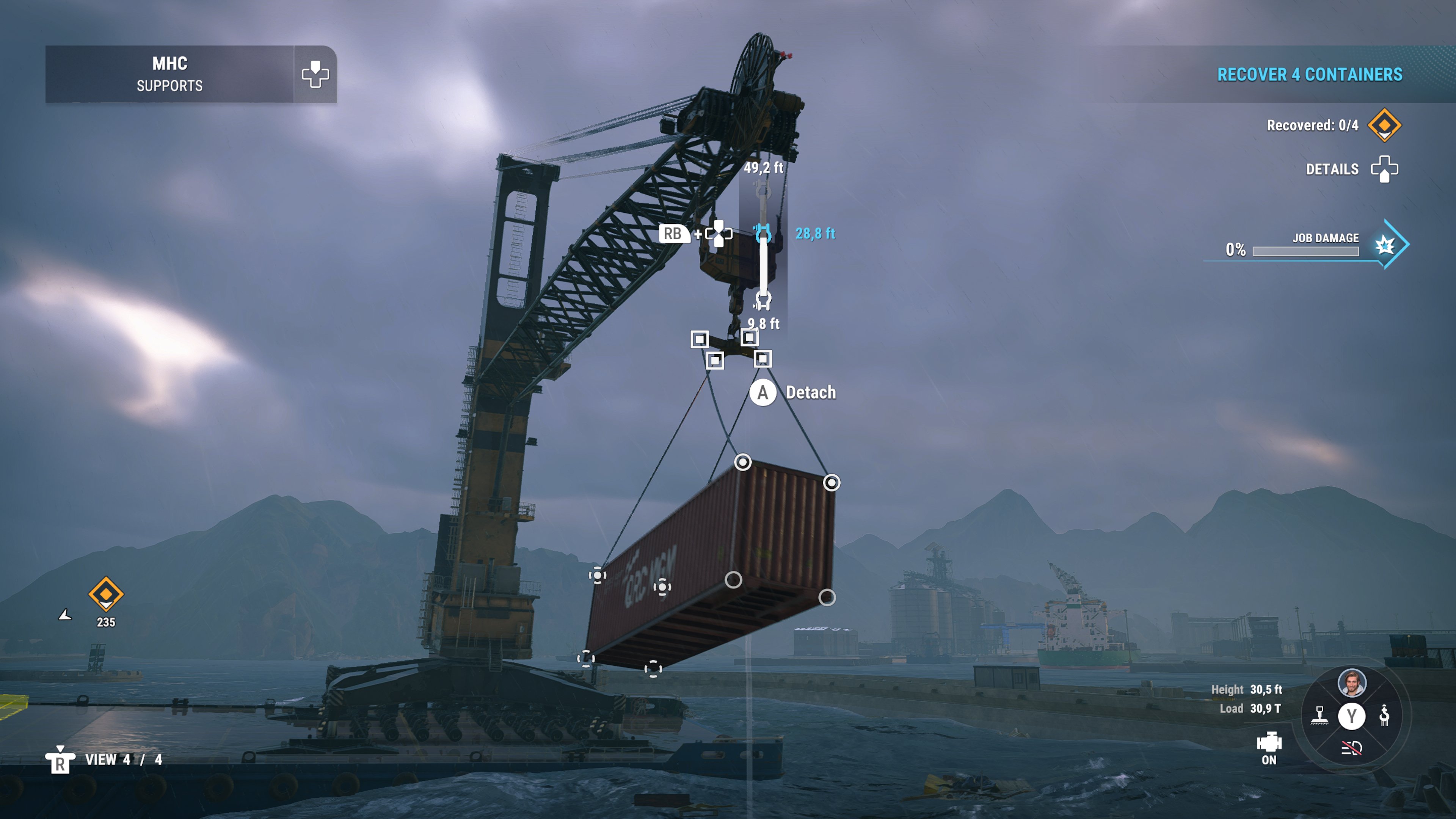
As a whole the various cranes & vehicles’ physics are spot on, believable, fun but challenging. You cannot, for instance, hurtle around a 90° corner in the Reach Stacker carrying a 40-foot container with its boom fully extended! (Don't ask me how I know.) Using multiple controls (shoulder buttons + stick directions & face buttons) at the same time will become second nature with this game, because unlike many construction machinery-type sims multiple simultaneous inputs are actually possible.
As you can see from the screenshots, Docked, which uses the Unity game engine, looks great, almost but not quite as good as its Saber ‘cousin’ Roadcraft.
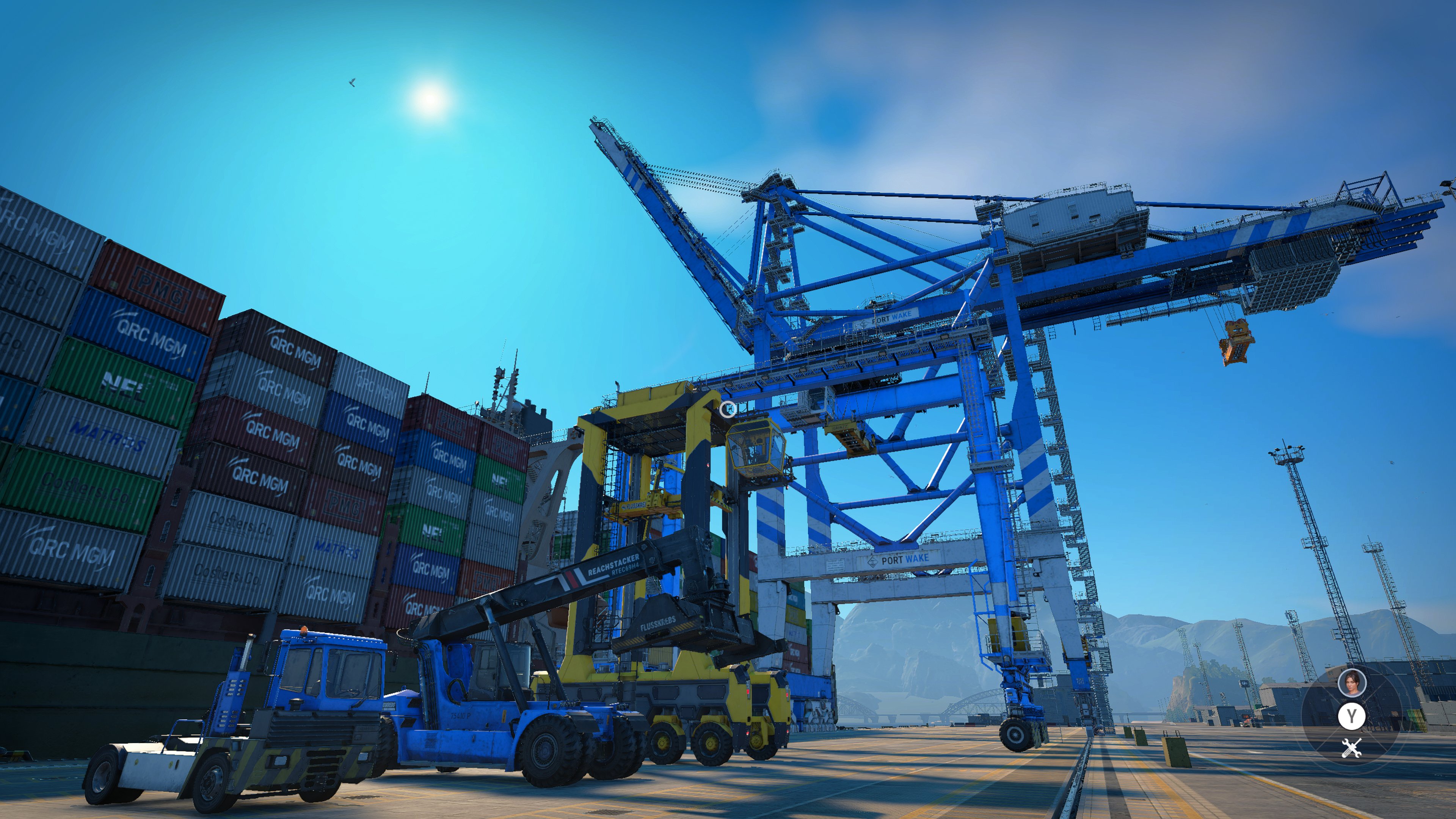
The water, whether it's the choppy sea, stormy rain or puddles in the container yard is exceedingly well done–apart from a lack of splashes when you dump something into the sea. Weirdly, the only visual issues we had are when on foot, where the frame rate gets slightly ‘swimmy’ and control suffers slightly.
We thoroughly enjoyed Docked, it draws the perfect line between serious simulation and playable, fun game, and just like Roadcraft, can't wait for some DLC so we can get back to the chaos of Port Wake.
Many thanks to Saber Interactive, Honest PR and PressEngine